Debt snowball vs avalanche: which payoff method fits you
How the debt snowball and debt avalanche methods work, what each one costs and gives you, and an honest way to choose the one you'll actually finish.
If you have more than one debt, the order you pay them off in matters. Not as much as the internet argues about it, but enough to be worth ten minutes of thought.
There are two well-known methods, the snowball and the avalanche. Both work. They differ in what they give you first: quick wins, or the lowest total cost.
What both methods share
The mechanics are the same, and they're the part that does the real work:
- List every debt with its balance, interest rate and minimum payment.
- Pay the minimum on all of them, every month, without fail.
- Put every extra dollar you can find toward one debt, the target.
- When the target is gone, take everything you were paying on it and add it to the next one.
Step 4 is why your payments grow as you go. The money that was going to a cleared debt doesn't return to your spending. It rolls forward. The only thing the two methods disagree on is which debt is the target.
The debt snowball: smallest balance first
With the snowball, you line your debts up from the smallest balance to the largest and ignore the interest rates.
You clear the smallest debt first, which often happens within a few months. Then its payment rolls into the next smallest, and so on.
What it gives you: early, visible progress. A debt disappearing entirely is a strong signal that the plan works, and you free up a minimum payment sooner, which gives your monthly budget a little more room.
What it costs: if your larger debts have higher interest rates, they sit there longer collecting interest, so you may pay more overall.
The debt avalanche: highest interest first
With the avalanche, you line your debts up from the highest interest rate to the lowest and ignore the balances.
You attack the most expensive debt first, the one that grows fastest if left alone.
What it gives you: the lowest total interest. Mathematically, no other order beats it.
What it costs: patience. If your highest-rate debt is also a big one, it can be many months before you clear anything, and that's a long time to keep going on faith.
A side-by-side example
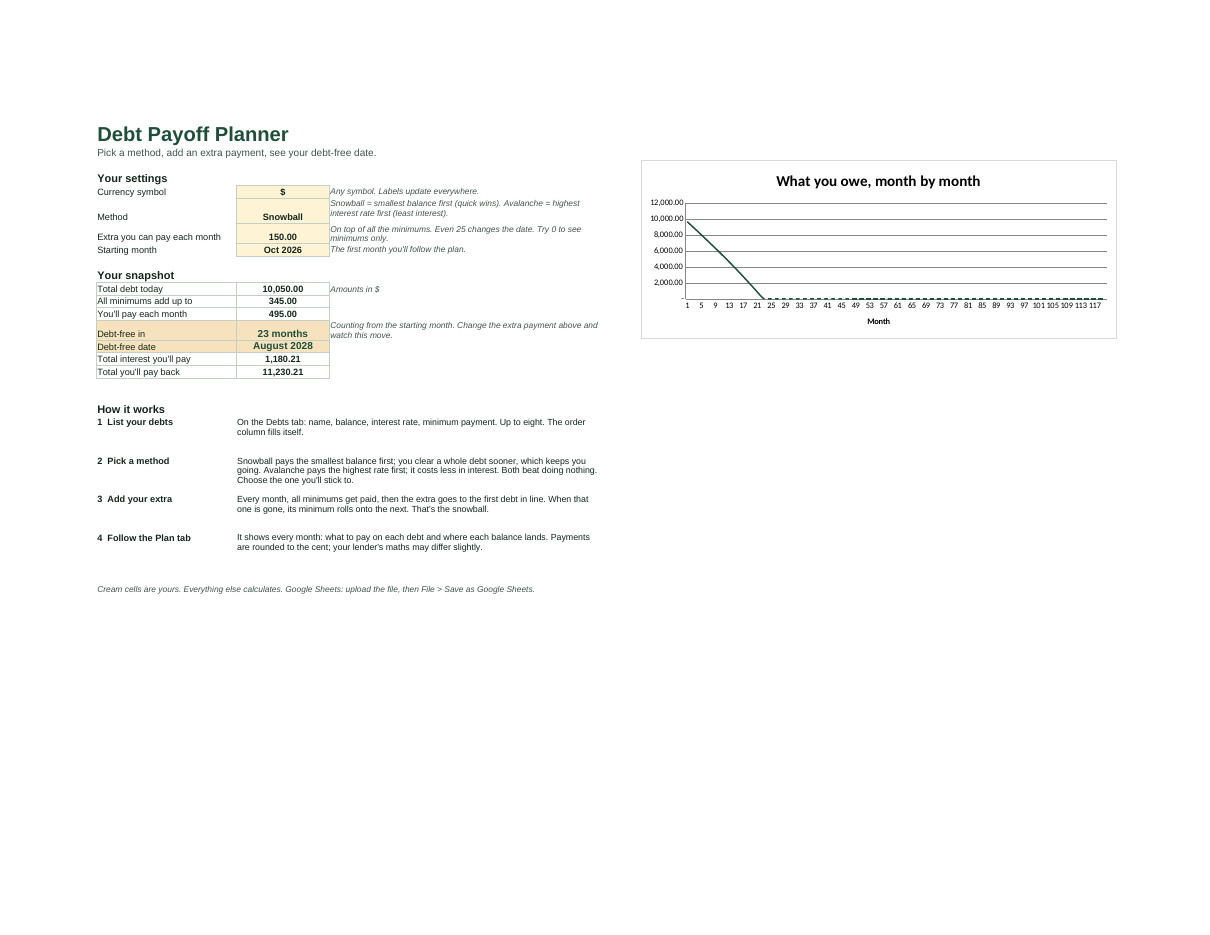
Take three debts and $150 a month extra on top of the minimums:
| Debt | Balance | Interest rate |
|---|---|---|
| Store card | $600 | 18% |
| Credit card | $4,500 | 24% |
| Car loan | $7,000 | 7% |
- Snowball order: store card, credit card, car loan. The store card is gone in a few months.
- Avalanche order: credit card, store card, car loan. The first debt takes much longer to clear, but the 24% balance starts shrinking from day one.
Here the two orders differ only in which card comes first, so the gap in total interest is modest. That's common. The difference between the methods grows when a large balance carries a much higher rate than the small ones, and shrinks when your rates are close together.
The honest way to compare is to run your own numbers both ways and look at two things: the total interest, and the date you'd make your last payment.
How to choose
Ask yourself these, in order:
- Have you started and stopped a payoff plan before? Choose the snowball. A plan you finish beats a cheaper plan you abandon in month five.
- Is one debt far more expensive than the rest, such as a high-rate card next to a low-rate loan? Lean toward the avalanche, or at least put that debt first.
- Are your rates all within a few points of each other? The order barely changes the cost. Pick the snowball for the momentum.
- Does one debt cause you the most stress, whatever its numbers? It's reasonable to put that one first. Money owed to a relative, or a debt with an aggressive collector, costs you in ways a spreadsheet doesn't show.
You can also mix them. A common approach is to clear one or two very small debts for a quick win, then switch to highest interest first for the rest.
What matters more than the method
The order matters less than these three things:
- The extra amount. $50 more a month does more than switching methods. Look for it in your budget before you agonize over the order.
- Not adding new debt. A payoff plan can't outrun new spending on the same cards. A small emergency buffer, even a few hundred dollars, stops every surprise from going back on a card.
- Never missing a minimum. Late fees and penalty rates undo months of progress.
If your minimum payments alone are more than you can afford, a payoff method won't fix that. Speak to your lenders early, and look for a free, non-profit debt advice service in your country. They can negotiate options that a plan on paper can't.
Fitting it into your budget
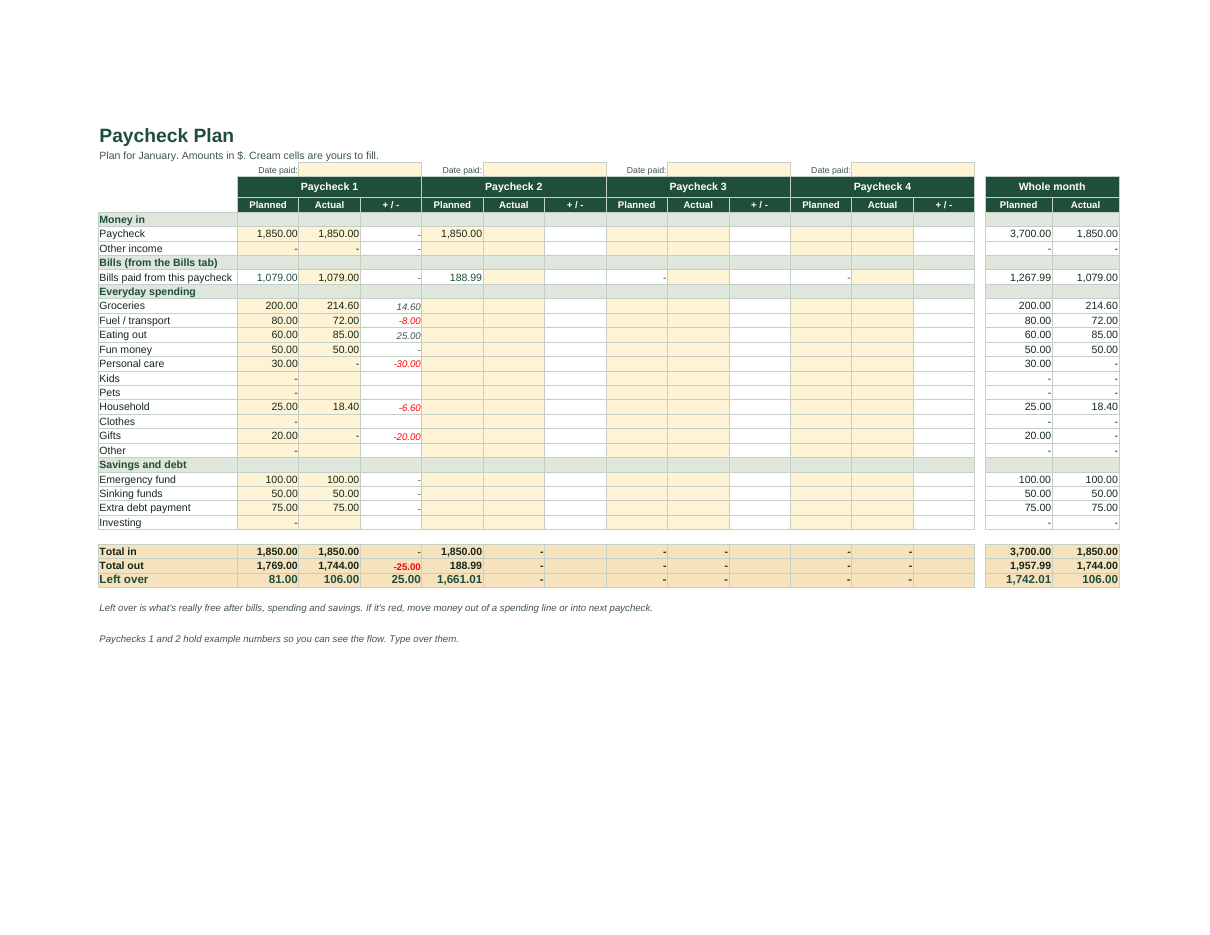
The extra payment needs a home in your plan, or it will get spent. Treat it like a bill and assign it to a specific payday. Our guide to budgeting by paycheck shows where it sits in the order.
Common questions
Which is faster, the debt snowball or the avalanche?
With the same extra payment, the avalanche usually finishes at the same time or slightly sooner, because less of your money goes to interest. The snowball clears your first debt sooner. The gap depends on how different your interest rates are.
Does the debt snowball cost more?
It can, when your largest debts also have the highest interest rates. When your rates are close together, the extra cost is small. Run your own balances both ways to see the real difference.
Can I switch methods partway through?
Yes. The list and the rolled-over payment stay the same, and only the order changes. Many people clear a small debt or two first, then move to highest interest first.
This guide is general information, not personal financial advice. Your numbers and circumstances are your own.