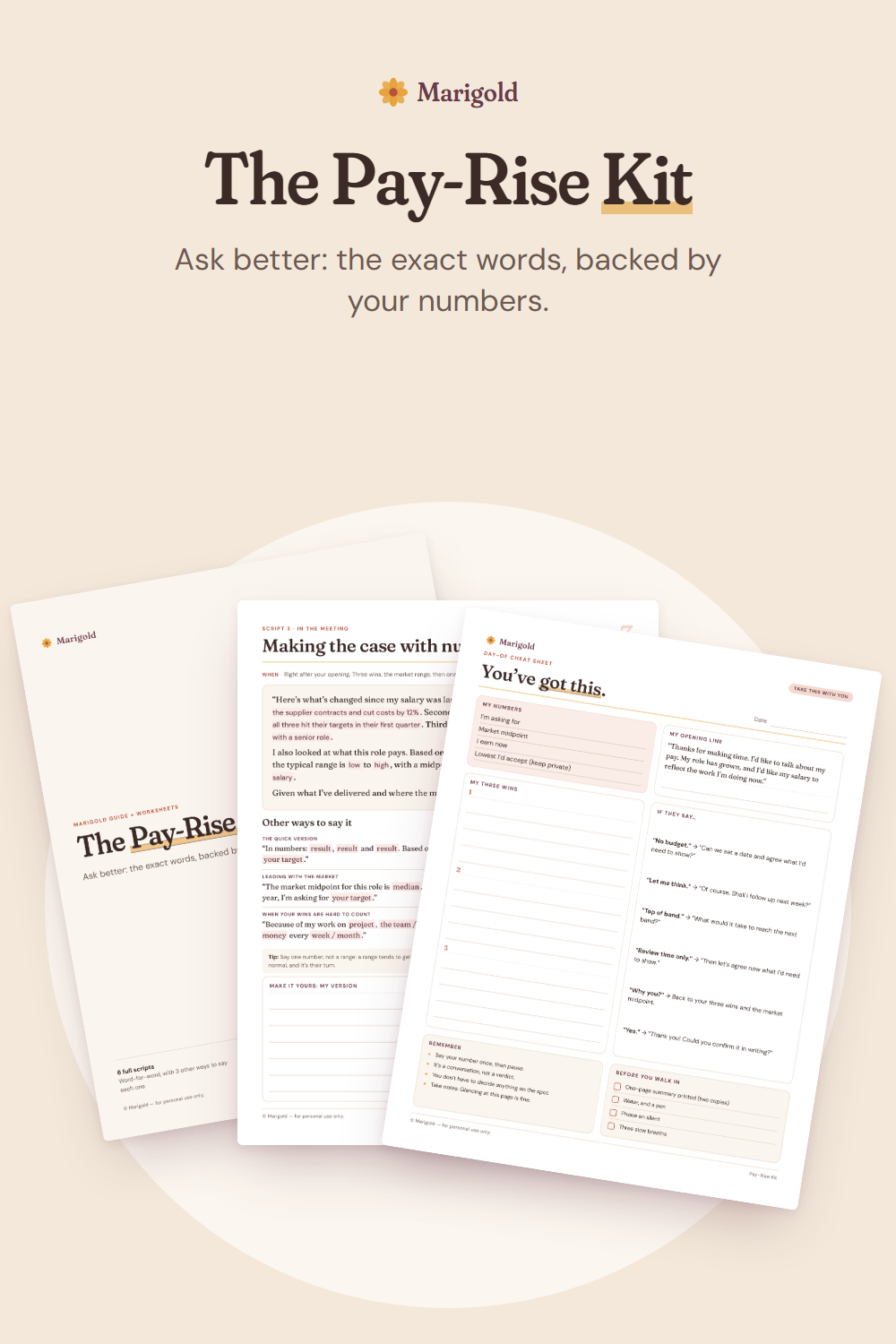
How to ask for a raise: a script and a one-page case
A calm, practical way to ask for a raise. What to gather first, how to choose your number, when to ask, and the exact words to open the conversation.
Asking for a raise feels like a confrontation. It's closer to a business case: here is what I do, here is what it's worth, here is what I'd like. The more it sounds like that and the less it sounds like an apology, the better it tends to go.
You don't need to be a natural negotiator. You need one page of evidence, one number and about four sentences.
Before you ask: build the case
Your manager probably has to justify the raise to someone else. Make that easy. Put together one page with three parts.
What you've delivered. List five to eight specific things from the last year. Use outcomes, not duties: "cut month-end reporting from three days to one" beats "responsible for reporting." Include numbers wherever they exist: revenue, time saved, customers kept, errors reduced, people trained.
How your job has grown. Note anything you do now that wasn't part of the role when your pay was last set: a bigger team, a new system you own, cover for a colleague who left.
What the role pays elsewhere. Look at current job adverts for the same title, level and location, and at published salary surveys for your field. Write down the range you find and where you found it.
If you haven't been keeping track of your wins, start a running note today. It's much easier to add a line each Friday than to remember a year's work the night before a meeting.
Choosing your number
Go in with a specific figure, not "something more."
- Start from the market range you found. If you're performing well, aim for the upper half of it.
- Ask for a little more than the number you'd be happy with. There's often a counter-offer, and it only goes down.
- Use an exact figure. "$68,500" sounds like you've done the sums; "around 70" sounds like a guess.
- Know your minimum before you walk in, so you don't have to decide it under pressure.
If the market range is well above your current pay, say so plainly. A large gap is the strongest argument you have.
When to ask
Timing won't make a weak case strong, but it can stall a good one.
Good moments: a few weeks before budgets or pay reviews are set, just after you've delivered something visible, or when your responsibilities have clearly grown.
Poor moments: in the middle of layoffs or a hiring freeze, in a corridor, or at the end of a meeting about something else.
Ask for a dedicated conversation. Something like: "I'd like to talk about my pay. Could we find 30 minutes this week or next?" That gives your manager time to prepare too, which helps you.
What to say
Keep the opening short. Four parts:
- Start with the work. "Over the past year I've taken on the client reporting and brought the turnaround down from three days to one."
- Name the gap. "I've looked at what similar roles pay here, and the range is $66,000 to $74,000."
- Ask. "I'd like to bring my salary to $70,500."
- Stop talking. This is the hard part. Let the silence sit. Whoever fills it usually gives something away.
A few things to leave out: apologies, personal expenses (your rent is not their business case), comparisons with named colleagues, and ultimatums you aren't ready to follow through on.
If the answer is "not right now"
A no is rarely the end of the conversation. Ask three questions, and write down the answers:
- "What would I need to show for this to be a yes?"
- "When can we look at it again?" Get a date, not "later in the year."
- "Is there anything else that could move in the meantime?" Options include a one-off bonus, extra leave, a title change, training, or flexible hours.
Then send a short follow-up email the same day: thank them, restate what was agreed and the review date. It turns a vague promise into a record.
If the answer is no with no path and no date, that's useful information too. It tells you what your options are inside the company, and you can decide what to do with it in your own time.
If you're nervous
Almost everyone is. A few things that help:
- Practice out loud, not in your head. Say the four parts to a friend, or to your phone, until the number comes out without a wobble.
- Bring your one page. You can glance at it, and you can leave it behind for your manager to pass upward.
- Remember what's normal. Managers have pay conversations regularly. A clear, well-prepared request is an ordinary part of their job, not an imposition.
A raise also changes your plan at home. When it lands, decide where the extra goes before it blends into everyday spending. Our guide to sinking funds is a good place to start.
Common questions
How much of a raise should I ask for?
Base it on what the role pays in your market, not on a percentage of your current pay. Find the range for your title, level and location, aim for the upper half if you're performing well, and ask for slightly more than the figure you'd accept.
When is the best time to ask for a raise?
A few weeks before pay or budget decisions are made, or shortly after a visible success. Avoid periods of layoffs or hiring freezes, and always ask for a dedicated meeting.
What should I do if my manager says no?
Ask what you'd need to show for a yes, agree a specific date to review it, and ask whether anything else can move in the meantime, such as a bonus, leave or a title. Confirm it by email the same day.
This guide is general information, not personal financial advice. Your numbers and circumstances are your own.