Sinking funds explained: what to save for and how much
What a sinking fund is, the categories worth having, and a simple way to work out how much to put in each one every payday. With a worked example.
Some expenses aren't surprises. The car needs servicing every year. December arrives every December. The annual insurance bill lands in the same month it always does. They still feel like emergencies, because the money for them was never set aside.
A sinking fund is how you set it aside. It's one of the simplest money habits there is, and it does more for day-to-day calm than almost anything else.
What a sinking fund is
A sinking fund is money you save a little at a time for a specific cost you know is coming. You pick the cost, work out how much it will be and when, and put a fixed amount toward it each payday.
Three things make it a sinking fund and not just "savings":
- It has a name (car repairs, not "misc").
- It has a target amount.
- It has a date, or it's ongoing with a ceiling.
When the bill arrives, you pay it from the fund. Your regular budget doesn't notice.
Sinking fund or emergency fund?
They do different jobs.
| Sinking fund | Emergency fund | |
|---|---|---|
| For | Costs you can see coming | Things you can't predict |
| Examples | Car service, gifts, annual fees | Job loss, urgent travel, a broken boiler |
| How it ends | You spend it, on purpose | Ideally you never touch it |
If you use your emergency fund for predictable costs, it's always half empty when a real emergency comes. Sinking funds protect it.
The categories worth having
You don't need twenty. Start with the three or four that have caught you out in the past year. Common ones:
- Car: servicing, tires, registration, repairs.
- Home: repairs, appliances, a deductible or excess.
- Gifts and holidays: birthdays, December, weddings.
- Annual bills: insurance, memberships, software, professional fees.
- Medical and dental: check-ups, glasses, prescriptions.
- Kids: school trips, uniforms, activities.
- Pets: vet visits, vaccinations.
- Travel: the trip you already know you're taking.
A quick way to find yours: look back through twelve months of bank statements and circle anything that wasn't monthly and made you wince.
How much to put in each one
The sum is the same for every fund:
Amount needed ÷ number of paydays until you need it = amount per payday.
A worked example, paid every two weeks:
- You expect to spend $600 on gifts and the holidays in December.
- It's the start of June, so there are about 13 paydays before then.
- $600 ÷ 13 is about $46 per payday.
For ongoing funds with no fixed date, such as car repairs, estimate a year's worth and divide by your paydays in a year (26 if you're paid every two weeks, 12 if monthly). If last year's car costs came to $780, that's $30 every two weeks.
If the per-payday total across all your funds is more than you can manage, don't abandon the idea. Fund the most painful one fully and the rest partly. A half-full fund still halves the problem.
Where to keep the money
There are three common setups. Pick the one you'll actually keep up.
- Separate savings pots or accounts. Many banks let you create named pots. Set a standing transfer for each payday and it runs itself.
- One savings account plus a tracker. All the money sits together, and a page or spreadsheet records how much belongs to each fund. It's less tidy but works with any bank.
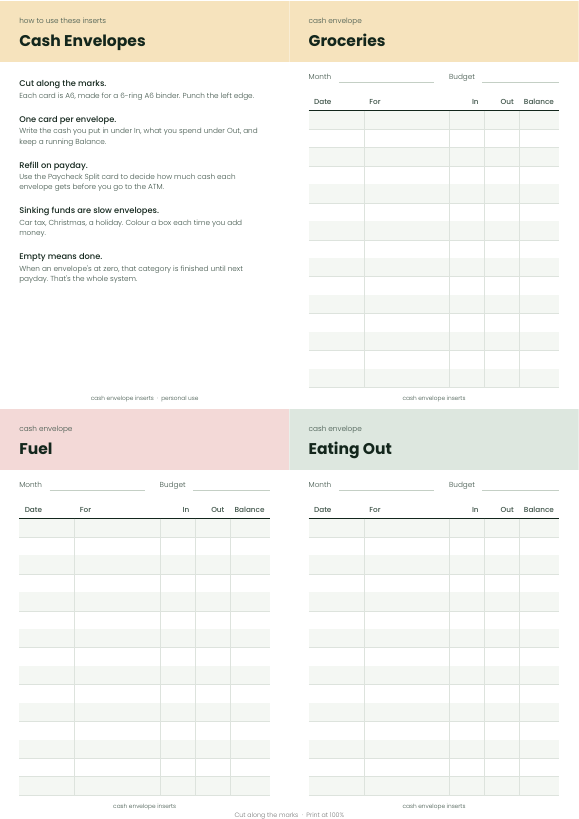
- Cash envelopes. If you use cash stuffing, each fund gets an envelope and a tracker card. It's tangible, which some people find makes the money harder to dip into. Keep larger amounts in the bank for safety and use the tracker to show what's there.
Whichever you choose, write down each deposit. Seeing a fund grow is what keeps the habit going.
When you have to dip in
Sometimes the car needs $400 and the car fund has $250. Use the fund first, cover the gap from your buffer or emergency fund, then raise the per-payday amount a little so the fund catches up. That's the system working, not failing: you had $250 you wouldn't otherwise have had.
If a fund keeps running short, your estimate was too low. Adjust it. Nobody gets these numbers right the first year.
Starting small
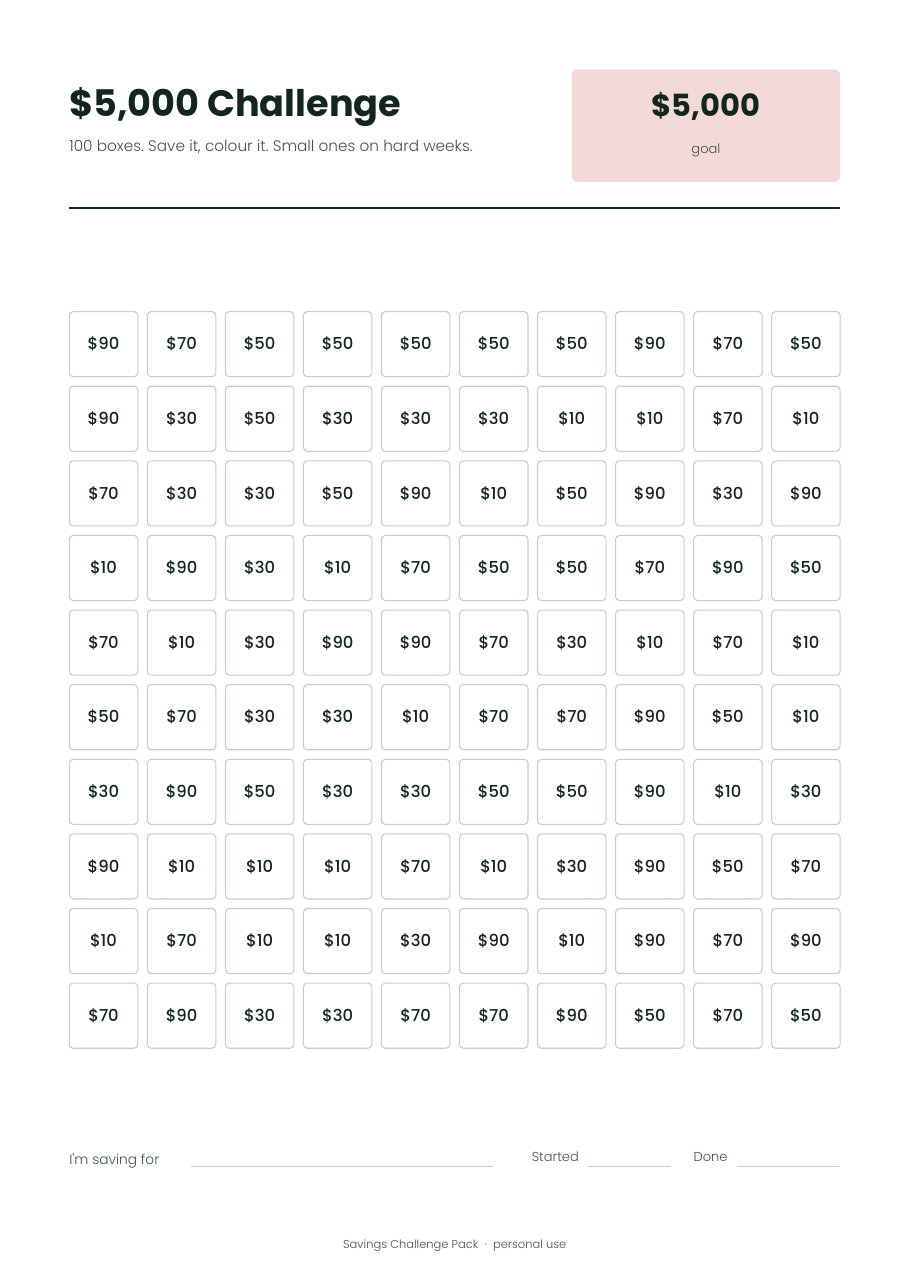
If money is tight, start with one fund and a small amount. Even $10 a payday into a car fund is $260 a year when you're paid every two weeks. A savings challenge can help here: coloring in a box each time you save turns a slow, invisible habit into something you can see on the fridge.
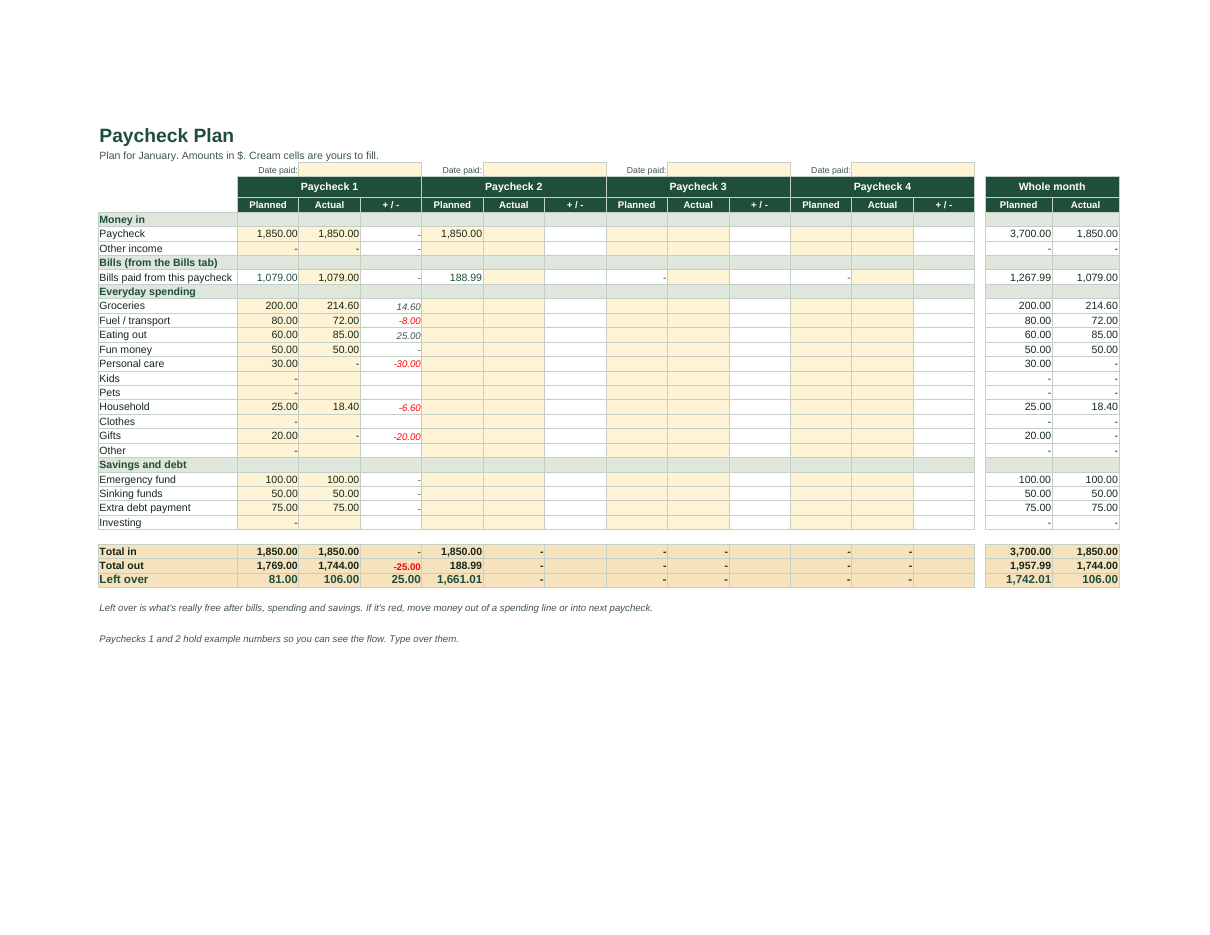
Once a fund is running, the next step is fitting it into each paycheck's plan. Our guide to budgeting by paycheck covers where savings sit in the order.
Common questions
How many sinking funds should I have?
Start with three or four that match the irregular costs you actually had in the past year. Add more only when a new cost catches you out. Too many small funds become hard to keep up.
How much should I put in a sinking fund?
Divide the amount you'll need by the number of paydays before you need it. For ongoing costs with no fixed date, divide last year's total by the number of paydays in a year.
Is a sinking fund the same as an emergency fund?
No. A sinking fund is for costs you can predict, such as car servicing or gifts, and you expect to spend it. An emergency fund is for things you can't predict, and ideally stays untouched.
This guide is general information, not personal financial advice. Your numbers and circumstances are your own.