How to keep track of bills and never miss a due date
A simple system to keep track of bills: one master list, a bill calendar and a ten-minute weekly check, so every due date is covered on time.
If you want to keep track of bills without carrying them all in your head, you need three things: one list of every bill, a way to see the due dates across the month, and a small routine for checking them. That's the whole system. It takes about an hour to set up and ten minutes a week to run.
Most late payments don't happen because the money wasn't there. They happen because a due date slipped past on a busy week. A bill tracker fixes the forgetting, which is the part you can fix today.
Why bills get missed
Bills arrive in different places. One comes by email, one in an app, one on paper, and a few never announce themselves at all because they come straight out of your account. No single inbox holds all of them, so your memory ends up doing the job.
Memory is bad at this. Due dates are scattered across the month, amounts change, and the yearly bills show up so rarely that they feel like a surprise every time. The answer isn't to try harder. It's to move the list out of your head and onto one page.
Step 1: Make one master list of every bill
Open the last two months of bank and card statements and go through them line by line. Every payment that repeats is a bill. Write each one down with:
- The due day. The date it leaves your account, or the date it has to be paid by.
- The usual amount. If it changes, use the highest it's been in the last few months.
- How it's paid. Automatically, or by you.
- Where it's paid from. Which account or card.
Don't skip the small ones. A streaming service, an app, a gym membership and cloud storage are all bills, and they're the ones people forget they have.
One safety rule: never write passwords, PINs or full account numbers on a bill list. "Joint account" or "blue card" is enough to tell you where the money comes from.
Step 2: Put the due dates where you can see them
A list tells you what you owe. It doesn't show you when. For that, put every bill on a calendar by its due day.
You can use a wall calendar, a phone calendar with repeating reminders, or a printed page with boxes numbered 1 to 31. What matters is that you can see the whole month at once, because the pattern is the useful part. Most people find their bills bunch up in one or two weeks, and that's exactly where the missed payments happen.
If you use phone reminders, set them for three days before the due date, not the day itself. That leaves time to move money if you need to.
Step 3: Decide which bills go on autopay
Automatic payments are the easiest way to stop paying late, but they aren't right for every bill. A rough guide:
| Kind of bill | Autopay? | Why |
|---|---|---|
| Fixed amount, every month (rent, loan, insurance) | Usually yes | Nothing changes, so there's nothing to review |
| Changes each month (energy, phone with extras) | Yes, but check the amount | A wrong bill gets paid before you notice |
| Paid from an account that runs low | Be careful | A failed payment can mean a fee from both sides |
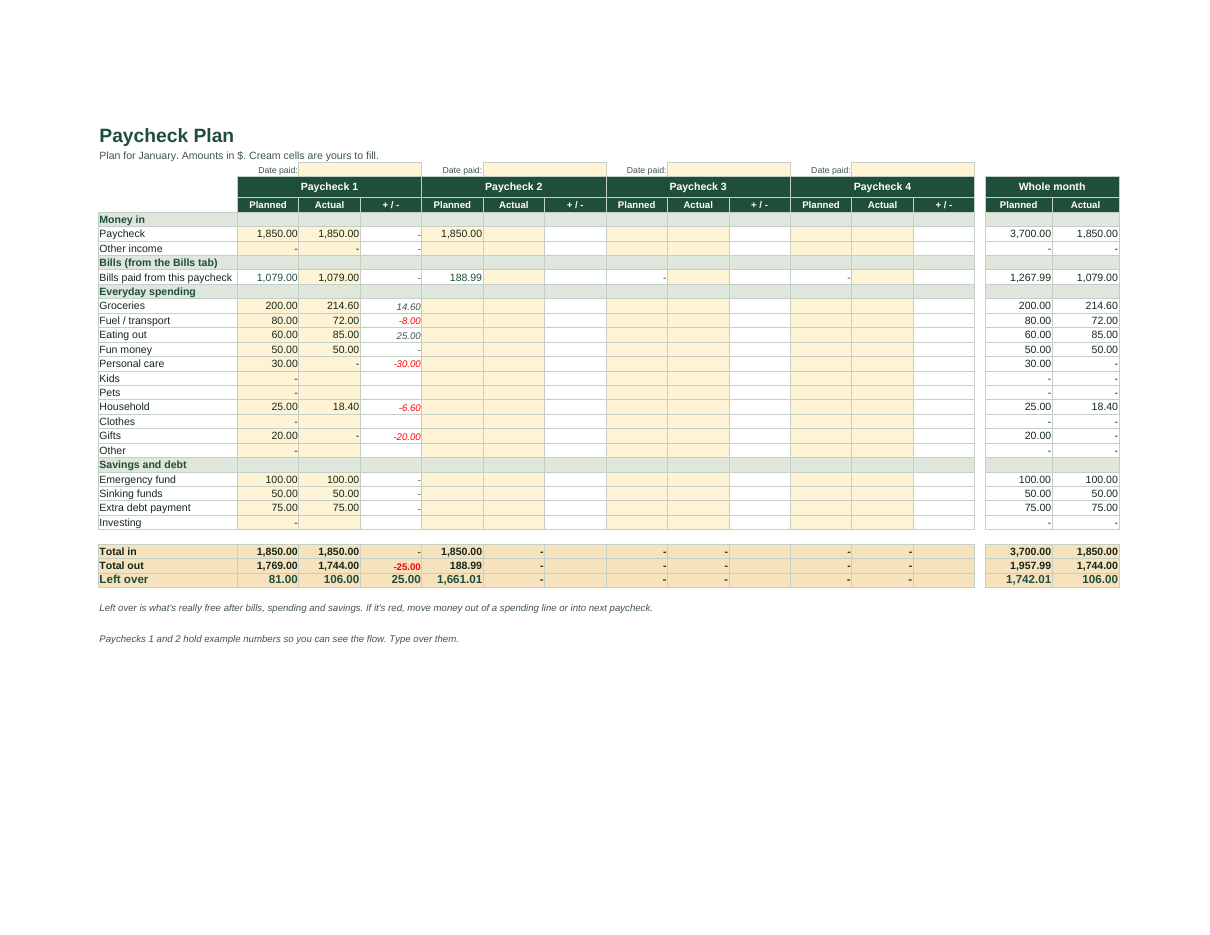
Autopay only works if the money is in the account on the day. If your balance gets tight before payday, it can be safer to pay those bills yourself the day your paycheck lands. Our guide to budgeting by paycheck shows how to match each bill to the payday that covers it.
And automatic doesn't mean invisible. Still tick each bill off once a month, so you'd notice if an amount jumped or a payment failed.
Step 4: Check your bills once a week
Pick one day and make it bill day. In ten minutes:
- Look at what's due in the next seven days.
- Pay anything that isn't automatic.
- Tick off what's been paid, and note the date.
- Check that the money for next week's bills is there, or will be.
Weekly works better than monthly because nothing can go wrong for long. A bill you'd have missed is caught within days, usually before it's late.
Keep a note of confirmation numbers for anything you pay by hand. If a company ever says a payment didn't arrive, you'll have the date and the reference in front of you.
Step 5: Plan for the bills that come once a year
Car insurance, registration, annual memberships and renewals cause the most trouble, because they're big and easy to forget. Give each one a monthly amount by dividing the bill by the months until it's due.
Say you have three yearly bills coming:
| Bill | Amount | Due in | Set aside each month |
|---|---|---|---|
| Car insurance | $600 | 6 months | $100 |
| Car registration | $120 | 4 months | $30 |
| Membership | $90 | 9 months | $10 |
That's $140 a month for now. It's a lot easier to find than $600 all at once. Keep the money somewhere separate so it doesn't get spent. This is what a sinking fund is, and our guide to sinking funds explains how to set them up.
What to do when the dates don't fit your paydays
If most of your bills are due just before you get paid, the problem is timing, and timing can often be changed. Many lenders, utilities and card companies will move a due date if you ask. Moving one or two bills to the week after payday can take the pressure off the whole month.
If the bills add up to more than you earn, a tracker won't fix that, but it will show it clearly. Contact the companies before a payment is missed, since many have hardship options. For debts you can't keep up with, a free non-profit debt advice service in your country can help you make a plan.
Common questions
What is the best way to keep track of bills?
Write every bill on one list with its due day, amount and how it's paid, put the due dates on a calendar, and check them once a week. The format matters less than having everything in a single place that you look at regularly.
Should I put all my bills on autopay?
Autopay suits fixed bills paid from an account that always has enough in it. For bills that change, or accounts that run low before payday, either check the amount each month or pay by hand on payday. Still review automatic payments monthly.
How do I keep track of bills on paper?
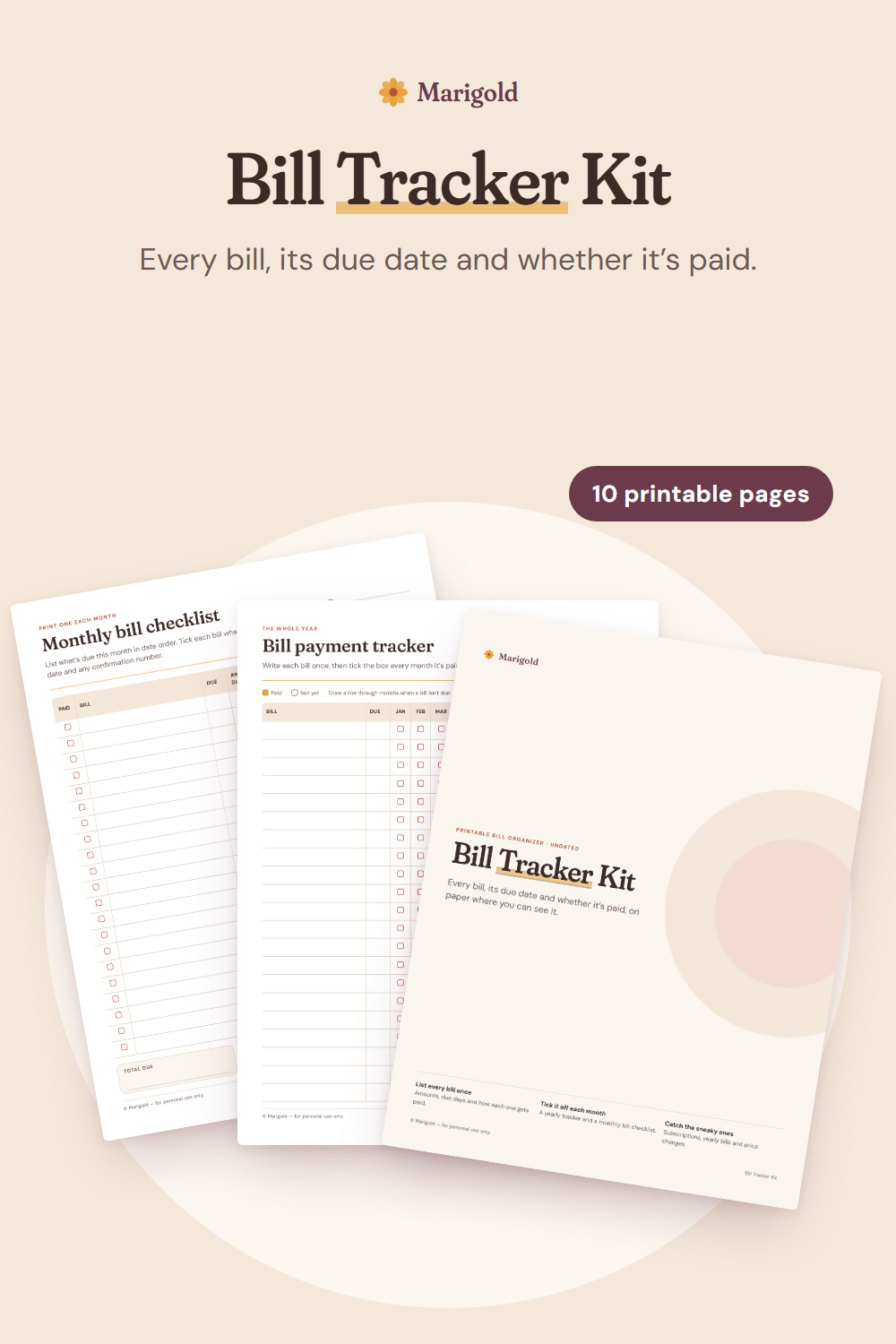
Use a master list of your bills, a monthly checklist where you tick each bill when it's paid, and a page that shows the month by due day. Keep them together where you'll see them, and leave passwords and full account numbers off the page.
This guide is general information, not personal financial advice. Your numbers and circumstances are your own.