How to build a $1,000 emergency fund on a tight budget
A step-by-step way to build a $1,000 emergency fund when money is tight, with small per-paycheck amounts, where to keep it and when to use it.
An emergency fund is money set aside for the things you can't plan: the car that won't start, the broken phone, the vet bill. A starter fund of $1,000 won't cover everything, but it covers most of the small disasters that otherwise go straight onto a credit card.
When your budget is already tight, $1,000 can sound like a joke. It isn't, as long as you stop thinking of it as one big number. This guide shows how to build a $1,000 emergency fund in small, fixed pieces, where to find those pieces, and what to do the first time you have to spend it.
Why $1,000, and why first
A full emergency fund is usually described as several months of living costs. That's a fine long-term goal and a discouraging first one. A starter fund is different. It's small enough to finish and big enough to matter.
It also protects everything else you're trying to do. Without a cushion, one surprise bill breaks the budget, lands on a card, and adds a new payment to next month. With a cushion, the same bill is annoying and then over.
If $1,000 feels out of reach right now, start with $250 or $500 as your first finish line. The method is the same, and a fund of $250 still pays for a flat tire.
Pick a per-paycheck amount you won't miss
Saving "whatever is left" at the end of the month rarely works, because there is rarely anything left. A small, fixed amount moved on payday works much better. Treat it like a bill.
Here's how long $1,000 takes if you're paid every two weeks:
| Saved per paycheck | Paychecks needed | Roughly how long |
|---|---|---|
| $20 | 50 | just under two years |
| $25 | 40 | about a year and a half |
| $40 | 25 | about a year |
| $50 | 20 | about nine months |
| $100 | 10 | about five months |
Pick the amount you could keep up in a bad month, not a good one. A steady $25 beats an ambitious $100 that you cancel in week three. You can always raise it later.
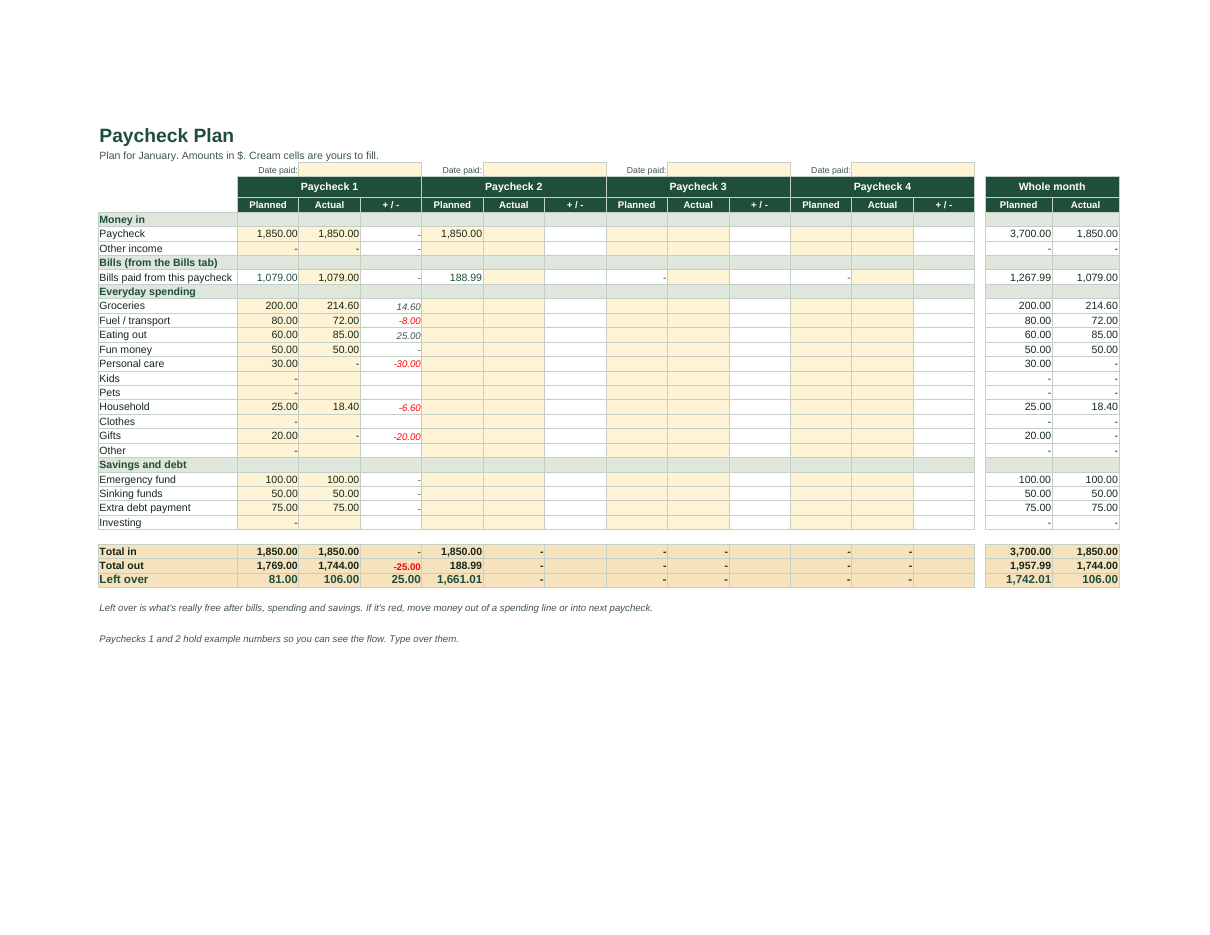
If you already budget by paycheck, add the transfer to each payday's plan, right after the bills. If one paycheck is much tighter than the other, save from the roomier one only and double the amount.
Find the money in three places
You don't need to overhaul your life. You need a few small, specific changes that add up to your per-paycheck number. Look in this order:
- Things you pay for and don't use. A subscription you forgot, an app, a membership. Cancelling costs you nothing you'd notice.
- One habit, trimmed, not removed. Two fewer takeout meals a month. One planned grocery trip instead of three quick ones.
- One-off money. Selling things you no longer use, a refund, a gift, an extra shift.
A made-up example: you cancel a $15 subscription, skip two takeout meals worth $45 in total, and trim $40 from the month's groceries with a list. That's 15 + 45 + 40 = $100 a month, which gets you to $1,000 in ten months without earning a cent more.
Move the money the same day you free it up. If the $15 stays in your everyday account, it disappears into everything else.
Keep it separate, but easy to reach
Where the fund lives matters almost as much as how you build it.
- Separate from your spending money. A different account or pot, so you don't see it every time you check your balance.
- Easy to reach in a real emergency. You should be able to get the money within a day or two, without a penalty.
- Not invested. This money's job is to be there, not to grow.
Savings accounts, fees and the protection on your deposits vary by country and by bank, so check the terms of any account before you open it. If a separate account isn't possible right now, a cash envelope kept somewhere slightly inconvenient does the job.
Giving the account a name helps more than you'd expect. "Emergency fund" is harder to dip into than "Savings 2."
Speed it up with a short challenge
If slow and steady feels too slow, add a burst. A short challenge gives you a quick jump that makes the goal feel real.
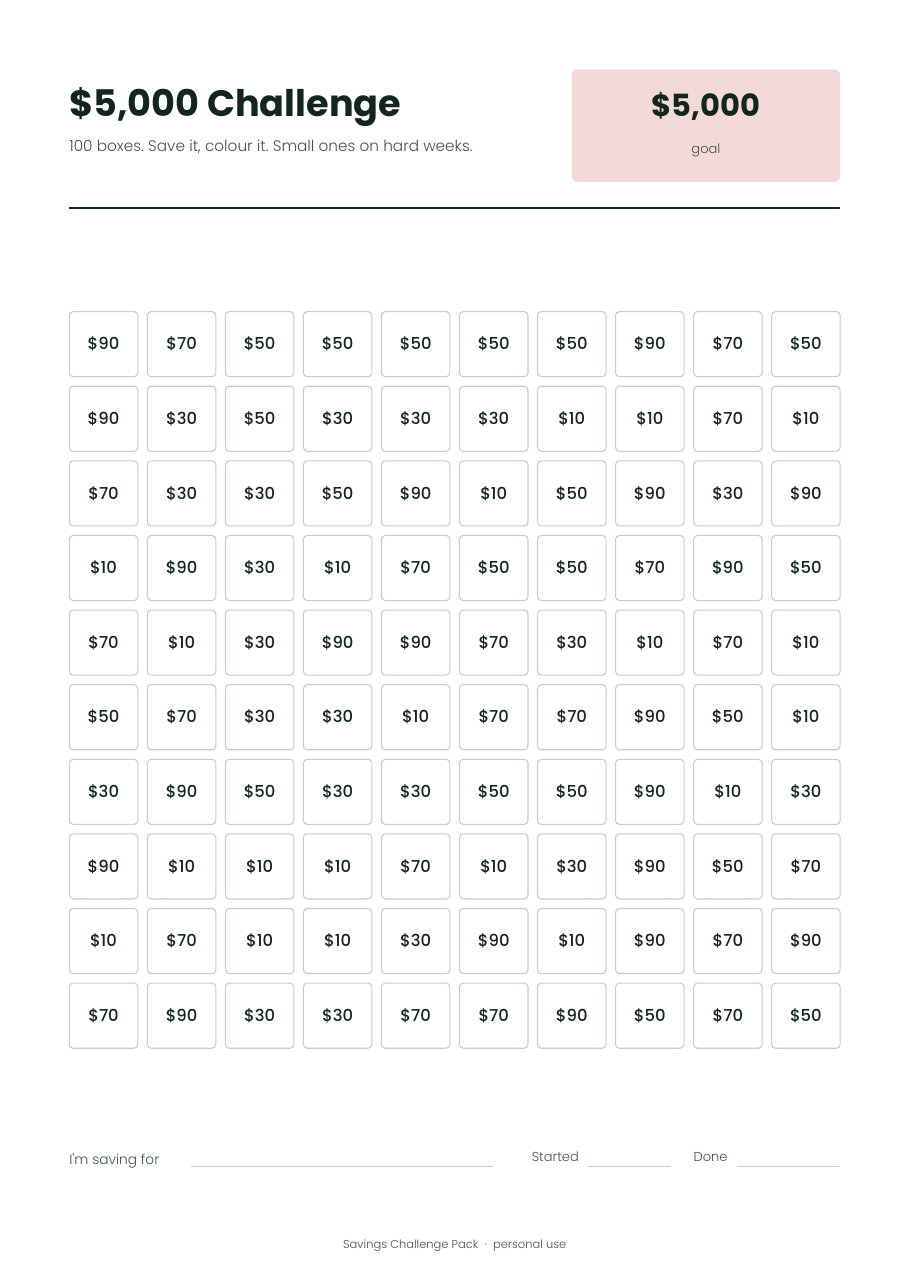
A no-spend challenge for a week or a month can free up a chunk at once: you pause the extras, and whatever you'd normally spend on them goes to the fund. A savings challenge with a tracker you color in works well if you like seeing progress on paper. The 52-week savings challenge guide covers gentler versions that suit a tight budget.
Also decide now what happens to unexpected money. A simple rule, such as "half of any extra goes to the fund until it's full," removes the decision later.
Decide in advance what counts as an emergency
A fund without rules slowly turns into a second spending account. Three questions keep it honest:
- Is it unexpected?
- Is it necessary?
- Is it urgent?
A car repair you need to get to work is yes to all three. Holiday gifts, a sale, or an annual insurance bill are not: they're predictable, which makes them a job for a sinking fund instead. Our guide to sinking funds explains how to plan for those separately, so they stop raiding your emergency money.
When you do use the fund, that's it working, not you failing. Pause any extra goals, go back to your per-paycheck amount, and refill it.
Common questions
How long does it take to save a $1,000 emergency fund?
It depends on the amount you can set aside each payday. At $50 every two weeks it takes 20 paychecks, about nine months. At $25 every two weeks it takes 40 paychecks, about a year and a half. One-off money, like selling unused things, shortens it.
Should I build an emergency fund or pay off debt first?
Many people keep paying at least the minimum on every debt while they build a small starter fund, so the next surprise doesn't become new debt. The right balance depends on your own situation. If you can't afford your minimum payments, contact a free non-profit debt advice service before anything else.
Where should I keep my emergency fund?
Somewhere separate from your everyday spending and easy to reach within a day or two, such as a basic savings account. Account types, fees and deposit protection differ by country and bank, so check the terms before you open one.
This guide is general information, not personal financial advice. Your numbers and circumstances are your own.